Flinn Scholars
Providing world-class undergraduate education in partnership with Arizona’s public universities.






Connect with Flinn Scholars: Stay up to date. Join our email list.
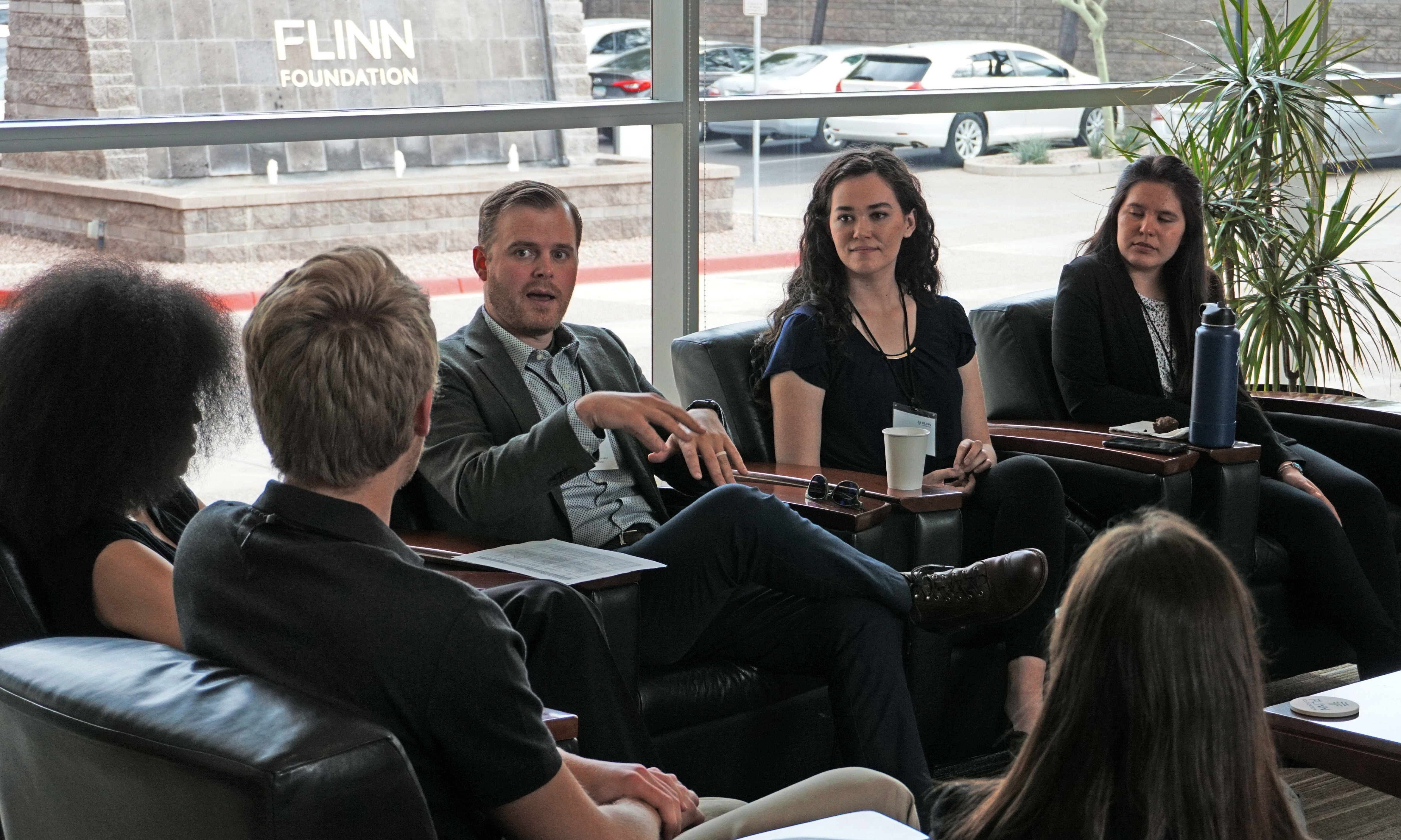
The Flinn Scholarship
The Flinn Scholarship isn’t about what you get. It’s about who you become and the impact you make. With the world-class education made possible by the Flinn Scholarship, you can become an agent of discovery, creativity and leadership who will make a difference.
The Flinn Scholarship—valued at more than $130,000—covers tuition, fees, housing, and meals at one of Arizona’s public universities, plus study abroad. Each year, about 20 top Arizona high-school seniors are chosen to learn from amazing faculty, business leaders, and civic innovators and join a vibrant, eclectic community—including a powerful alumni network.
What’s the Flinn Scholar blueprint? There is none. Scholars emerge from throughout Arizona and become leaders in every discipline you can imagine.

36 Finalists to interview for the Flinn Scholarship
The 36 Flinn Scholarship Finalists from the Class of 2024—high-school seniors representing 30 Arizona high schools and seven counties—will interview in March with the program’s Selection Committee with the hope of becoming one of this year’s 20 Flinn Scholars.
More than 1,000 Arizona high-school seniors applied in the fall for a chance at earning the merit-based 2024 Flinn Scholarship. The 80 Flinn Scholarship Semifinalists were previously announced in early January.
The Flinn Scholars Class of 2024 will be announced by the Flinn Foundation in the spring. The Flinn Scholarship, now in its 39th year, provides funding for tuition, housing, meals, and study abroad—a value of more than $130,000. [Read more]

Flinn Foundation adds two Phoenix business leaders to board of directors
Arizona business leaders Chris Camacho and Adam Goodman—the heads of Greater Phoenix Economic Council and Goodmans, respectively—have been elected to the Flinn Foundation board of directors, which is responsible for allocating funding for the foundation’s grants and programs while setting its strategic direction.
Camacho, an advocate for the biosciences, other innovation industries, and the arts has served as president and CEO of the economic development organization for nearly a decade. Goodman represents the third generation to lead the Goodmans family business, a furniture and office design company. Goodman, an ardent supporter of the arts, journalism, and health care, is also a Flinn-Brown Fellow, participating in 2023 in the cornerstone program of the Arizona Center for Civic Leadership at the Flinn Foundation. [Read more]
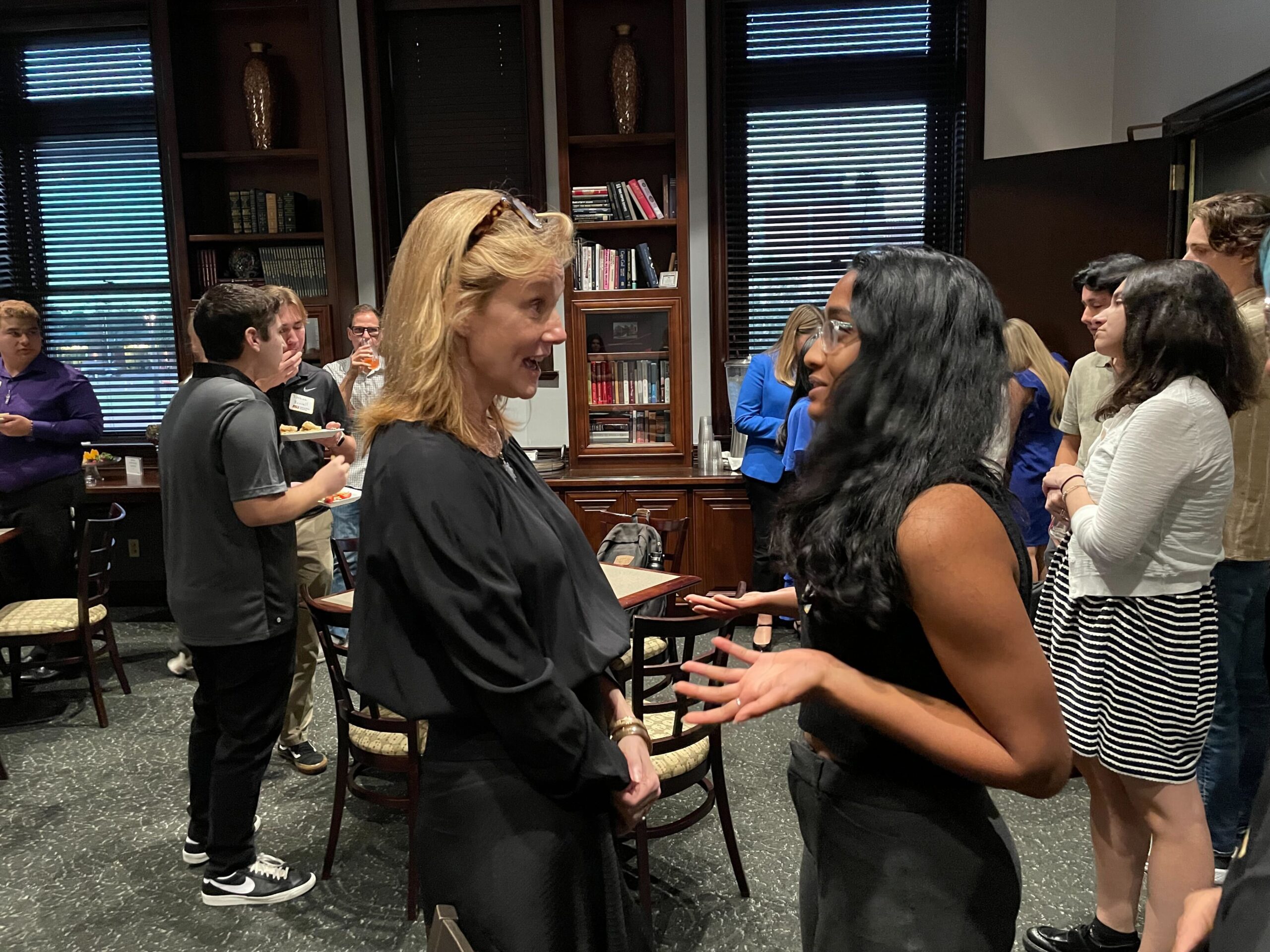
A Flinn Scholar reflects on a conversation with actress Laura Linney
“Having the opportunity to meet Laura Linney was an incredibly insightful one. To be entirely honest, I was not sure what to expect walking into the meeting room considering this was my first Arizona State University Centennial Lecture. The only thing that I knew going in was the Flinn Scholars would be having a private small-group discussion with an incredibly celebrated and well-known actress. The idea itself was surreal; I never expected to interact so closely with someone so esteemed in their field.”
Nagasriya Ramisetty, a Class of 2023 Flinn Scholar studying physiology and medical sciences at the University of Arizona, reflects on her experience attending the ASU Centennial Lecture and the exclusive conversation the Scholars enjoyed with Linney. [Read more]
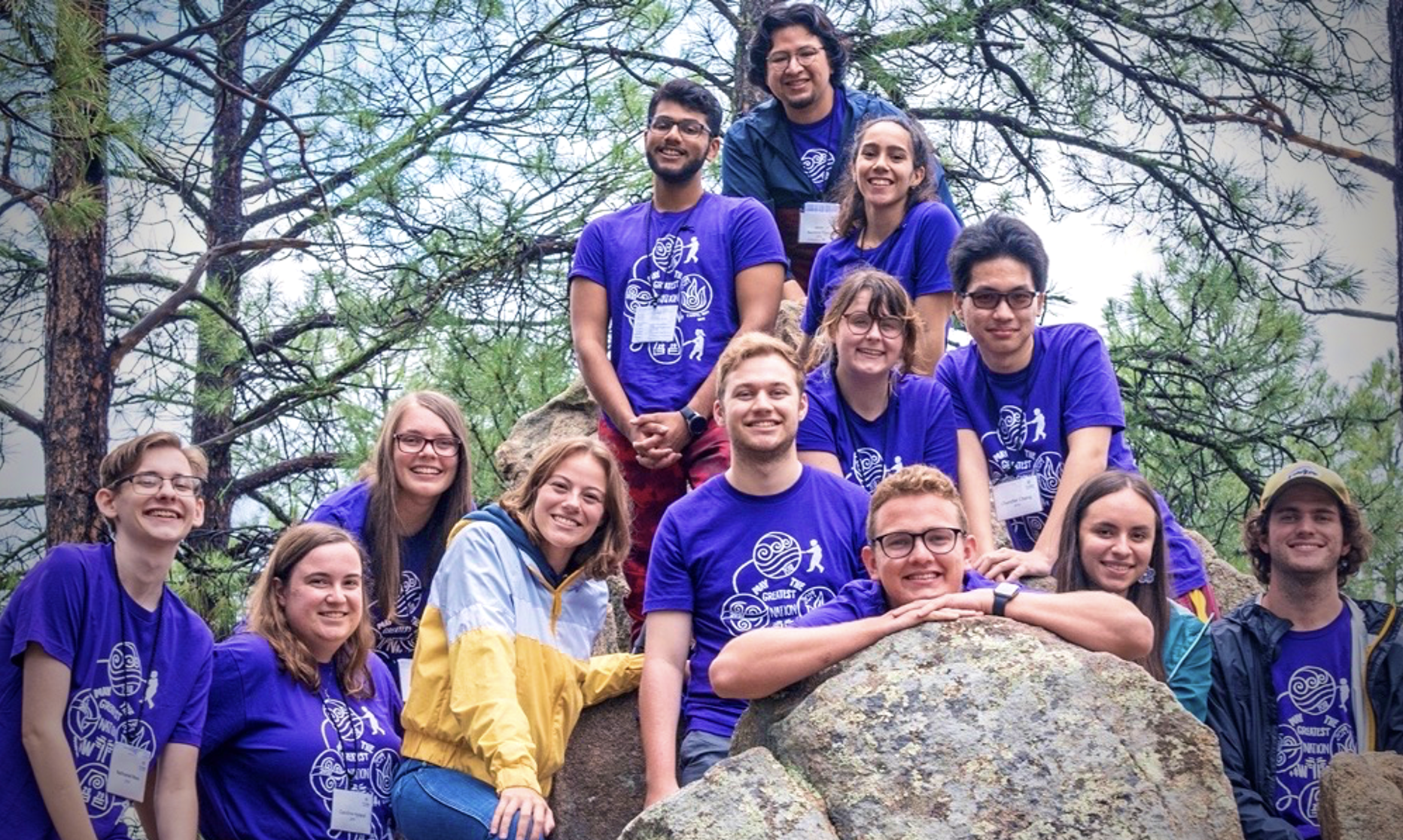
Learn what to expect as a Flinn Scholar
The Flinn Scholars Program has presented a virtual information session to provide insights about the most prestigious college scholarship available to Arizona high-school seniors. The recorded session is available for viewing.
The session is designed to help high-school students, parents, teachers, and counselors learn about the benefits of the Flinn Scholarship. Flinn Scholars Program staff presented strategies to assist in building a strong application, and Flinn Scholars shared their experiences and what high-achieving students can anticipate as Honors students at Arizona’s public universities. [Watch]
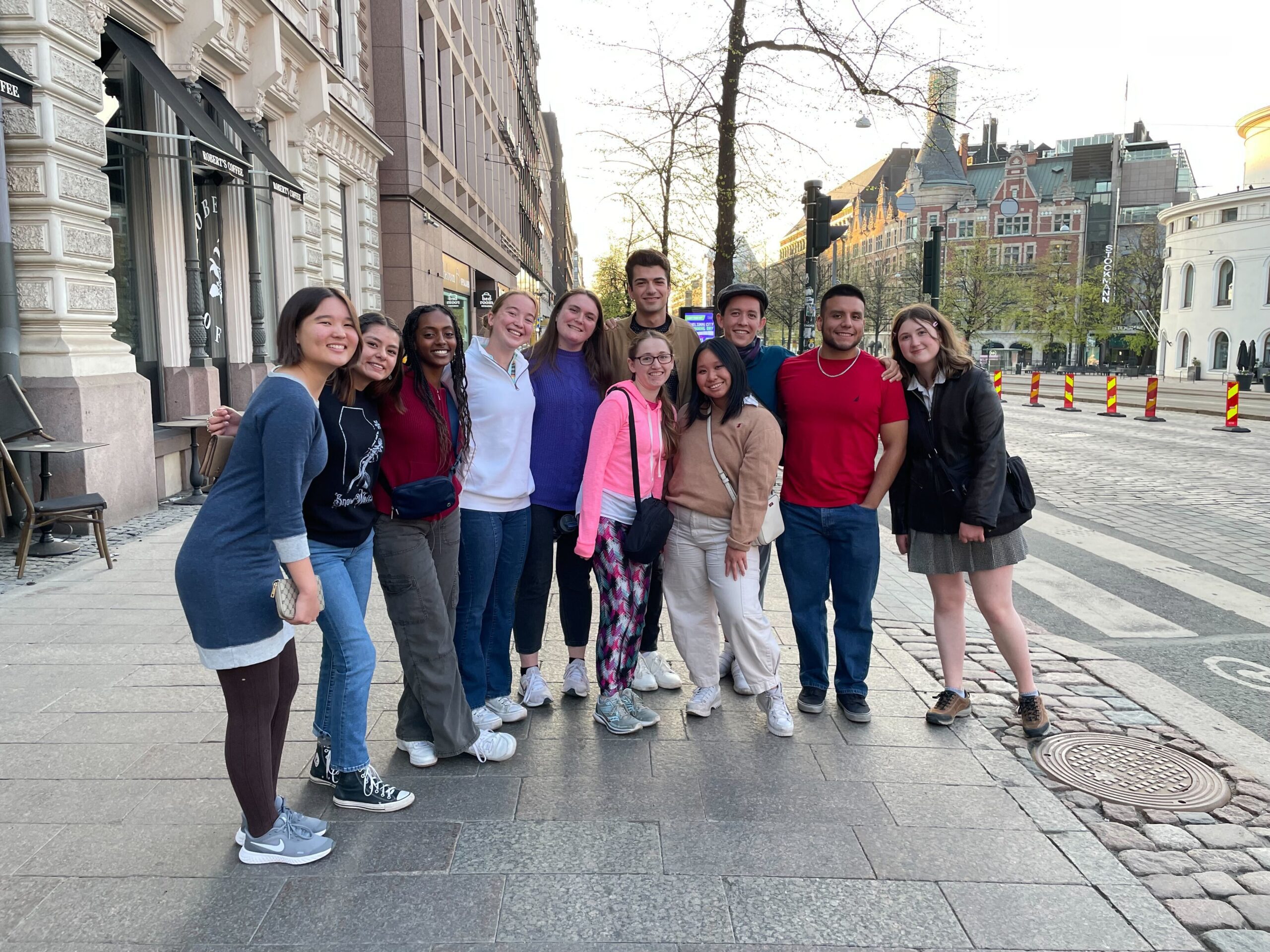
Experience new cultures with Flinn Scholar study abroad
One hallmark of the Flinn Scholarship is two funded study-abroad experiences—a group summer seminar after freshman year and a destination chosen by the Flinn Scholar.
The summer seminar allows Scholars to deeply experience other cultures in both urban and rural settings, which have ranged from Hungary and Romania to China and France and most recently in 2023, Finland. “The Finnish Experiment: Exploring Finnish and American Societies Through a Comparative Lens” examined Finland’s educational system in a comparative context to the American K-12 system.
The time abroad strengthens community and prepares each Flinn Scholar for their individual study-abroad experience, which can range from a summer to a semester to a year. [Read more]
Details For
A great Flinn Scholarship application has many components. But we only select students we believe we really know. Be yourself.
There are a number of specific ways throughout your student’s high-school years to help ensure a strong application and candidacy.
In addition to student-submitted materials, the application requires two teacher recommendations and a high-school academic counselor’s report.
News and Updates

Flinn Scholars
Flinn Foundation adds two Phoenix business leaders to its board of directors
Arizona business leaders Chris Camacho and Adam Goodman—the heads of Greater Phoenix Economic Council and Goodmans, respectively—have been elected to the Flinn Foundation board of directors.
Camacho, an advocate for the biosciences, other innovation industries, and the arts has served as president and CEO of the economic development organization for nearly a decade–an era of incredible economic growth throughout the Phoenix metro area with an abundance of new companies, jobs, and investment.

Flinn Scholars
36 Finalists to interview for the Flinn Scholarship
More than 1,000 Arizona high-school seniors applied in the fall for a chance at earning the prestigious 2024 Flinn Scholarship and a full ride to an Arizona public university. The 80 Semifinalists announced in early January were interviewed virtually last week. And today, there remain 36 Flinn Scholarship Finalists, who will interview in March with […]

Flinn Scholars
80 Arizona high-school seniors named 2024 Flinn Scholarship Semifinalists
The 80 Flinn Scholarship Semifinalists from the Class of 2024 will participate in preliminary interviews later this month as they pursue Arizona’s most competitive merit-based college scholarship. The excelling high-school seniors were selected as Semifinalists from more than 1,000 applicants and in so doing have already earned a generous scholarship offer from Arizona’s public universities. […]

Flinn Scholars
A Flinn Scholar reflects on a conversation with actress Laura Linney
Having the opportunity to meet Laura Linney was an incredibly insightful one. To be entirely honest, I was not sure what to expect walking into the meeting room considering this was my first Arizona State University Centennial Lecture.
For information about Flinn Scholars, please contact:
flinnscholars@flinn.org or (602) 744-6802

Anne Lassen
Vice President, Scholarship and Education Initiatives
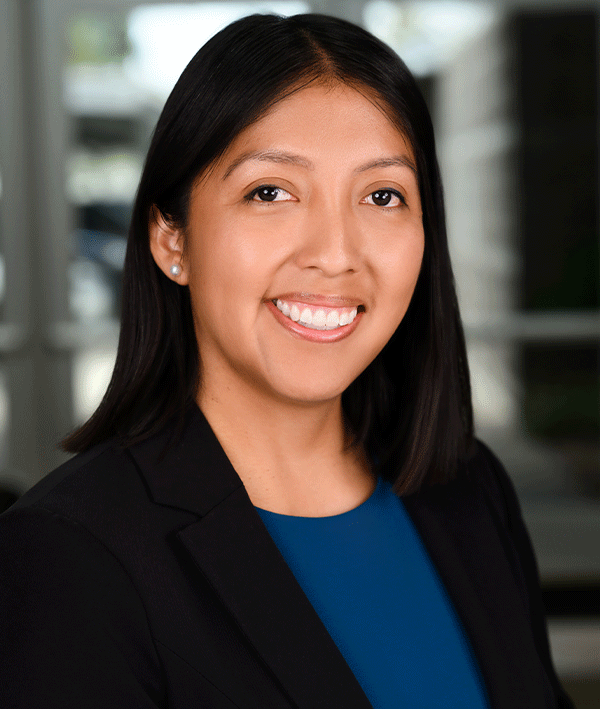
Haydee Kukowski
Program Manager, Scholarship and Education Initiatives
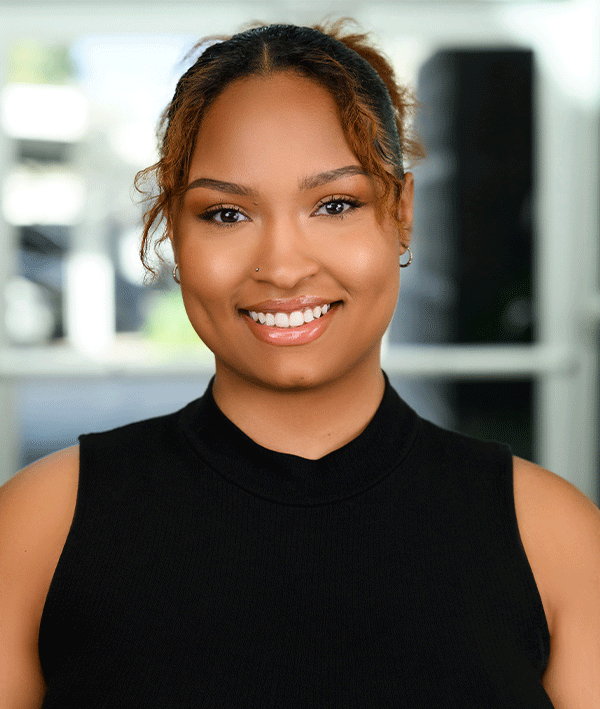
Kiana Keys
Program Coordinator, Scholarship and Education Initiatives